
Waataa Chat - Party & Live
Hair DanceSocial
4.153.00 Reviews
- Version
- 1.0.26
- Installs
- 100.00K
- Age Rating
- Mature 17+
Screenshots


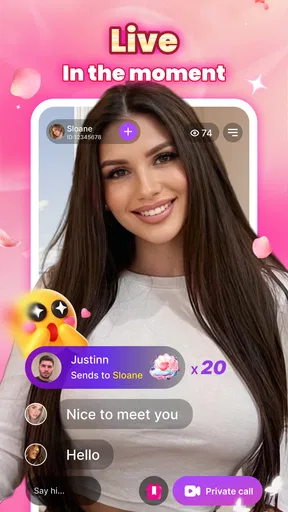
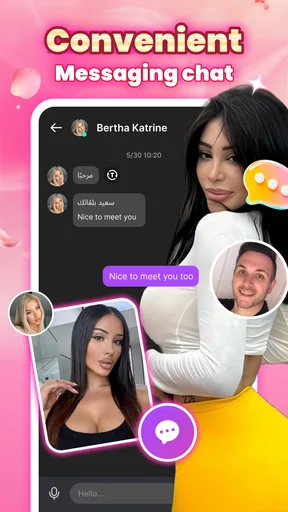

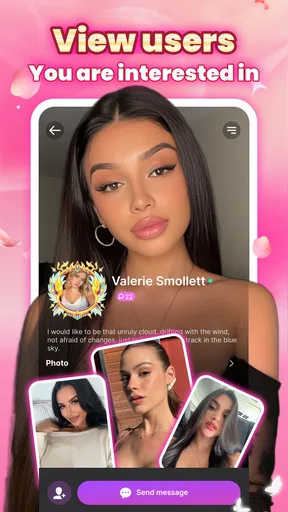
Our Review of Waataa Chat - Party & Live
 Analysis by Appyee
I approached Waataa Chat - Party & Live as a social app for people who prefer live interaction over carefully edited posts. Its purpose is straightforward: connect users through video conversations with people from different places. That makes it appealing when you want a more immediate, human exchange rather than another scrolling feed. My overall impression is that it can be enjoyable for spontaneous socializing, but its value depends heavily on how comfortable you are with public or semi-public video interaction and with the boundaries that come with a mature social service.
The app comes from Hair Dance and sits in the social category. It is free to install, with optional in-app purchases ranging from $2.99 to $99.99 per item. That distinction matters: you can try the basic experience without paying, but the presence of purchases means I would not treat the free label as a guarantee that every part of the experience is equally available without spending. The mature 17+ rating is also important. I would not recommend treating this as a casual app for younger family members simply because the download itself costs nothing.
How the free experience translates into real value
In practical terms, the strongest reason to try Waataa Chat is the chance to meet people outside your normal circle without arranging a formal call first. A conventional messaging app is excellent when you already know someone. A video meeting tool is better when you need a planned conversation with a group. This app occupies a different space: it is designed around the possibility of discovering a conversation as you use it.
That spontaneity can make a quiet evening feel less isolated. For example, I can imagine using it after moving to a new city, during a long period of working alone, or while looking for casual contact with people who do not share my immediate routine. The live format also gives a conversation more texture than text. Facial expressions, pauses, and tone can make it easier to decide whether a person feels friendly, interesting, or simply not like a good match.
At the same time, I would not confuse live access with guaranteed friendship. A service can put people in front of you, but it cannot ensure that every exchange is thoughtful, safe, or worth continuing. The real value is therefore conditional. If you enjoy starting conversations with strangers and can leave unproductive interactions without taking them personally, the free entry point gives you a reasonable way to test the concept. If you want dependable contact with specific friends, another type of app will usually serve you better.
The current version is 1.0.26, and the app supports devices running Android 6.0 or later. That broad operating-system requirement makes it accessible to people who are not using a recent phone, although video quality and comfort will still depend on the device itself, the camera, the microphone, and the connection. I would test it on the phone I intend to use rather than assuming that an older device will provide a smooth conversation.
One useful habit is to treat the first session as an evaluation rather than a commitment. I would check how quickly I can understand the conversation flow, whether controls are easy to find while a call is active, and how comfortable I feel ending an interaction. Those details matter more in a live social app than a polished icon or a short store description. If leaving a conversation feels awkward or if the interface makes basic controls hard to reach, the free download may not translate into much practical value.
Where it differs from ordinary social alternatives
Compared with a text-first platform, Waataa Chat puts more pressure on the moment. Text gives you time to think, edit, ignore, or respond later. Live video removes much of that distance. That can create more genuine exchanges, but it can also make the experience tiring for people who prefer privacy or careful communication.
Compared with a traditional video-calling service, the appeal is less about scheduling a known participant and more about social discovery. I would choose a familiar calling tool for family, work, appointments, or a planned group event. I would consider this app when the goal is to widen my social circle and accept a degree of unpredictability.
It also differs from a standard social feed because the main value is not simply consuming posts. A feed lets you remain invisible for long periods. Live video asks you to participate. That makes the app more rewarding for outgoing users, language learners who want conversational practice, and people who find text-based introductions too flat. It is less attractive for anyone who wants to browse quietly without being seen or approached.
A non-obvious trade-off is that live video can help you judge compatibility quickly, but it can also encourage snap decisions. Someone may appear shy because of a poor connection, nervousness, or an unfamiliar language, not because they have nothing interesting to say. I would give conversations a little room when appropriate, while still trusting my instincts if a person crosses a boundary. The format rewards openness, but it should not eliminate caution.
What the mature rating changes about the decision
The 17+ rating should shape how I use the app, not merely where I download it. I would avoid assuming that the social environment will feel like a moderated school-friendly chat room. Adults using a live video service need to be ready for conversations that may be direct, uncomfortable, or unsuitable for younger viewers.
That does not mean every interaction will be problematic. It means the app is better suited to adults who can make quick judgments, end conversations, and avoid sharing personal details too early. I would keep identifying information out of initial chats, avoid moving immediately to private contact channels, and never let curiosity override discomfort. Those are not decorative precautions here; they are part of getting value from a service built around meeting unfamiliar people.
I would also use the app in a setting where I can concentrate. Joining a live conversation while distracted, commuting, or surrounded by other people can lead to accidental oversharing and poor decisions. A short session with clear limits is more sensible than leaving the app open indefinitely. This is one of the places where the mature rating and the live format intersect: the user has to manage the experience actively.
How to judge purchases without overestimating the free label
The installation price is free, while individual in-app purchases are listed from $2.99 to $99.99. I see that as a reason to begin cautiously. The free access is useful for deciding whether the social format suits me, but I would not buy anything simply because a conversation is entertaining or because I feel pressure to keep someone’s attention.
The difference between free access and paid value is especially important in a social app. A purchase may feel worthwhile only if it changes something I genuinely use repeatedly, not because it promises a vague improvement in popularity or access. Before spending, I would identify the exact benefit shown at the point of purchase, consider whether I can enjoy the app without it, and set a personal limit. The upper end of the listed purchase range is substantial enough that casual experimentation should not become automatic spending.
I would also avoid judging the app by the most expensive item. The existence of a high-priced purchase does not tell me that I need it, nor does the free download prove that the paid layer is necessary. My value test would be simple: use the basic experience first, notice what actually limits my conversations, and pay only if that limitation is clear and the cost feels justified for my own use. If I cannot explain what I am buying in one sentence, I would skip it.
This approach is more useful than comparing the app with services that use a completely different business model. A free messaging app may offer broad communication without the same discovery angle, while a subscription-based social service may provide a more predictable structure. Waataa Chat makes most sense when the free entry point lets me explore live social contact and the optional spending remains controlled. It makes less sense if I already know I dislike purchase prompts or if I expect every meaningful interaction to be included automatically.
Small habits that make live social use better
My first practical tip would be to prepare a few neutral conversation starters before opening a session. This sounds minor, but live interaction leaves little time to invent a topic when the other person is also waiting. Questions about hobbies, travel preferences, films, food, or daily routines are easier to handle than immediately asking for personal information. They also reveal quickly whether the conversation has a natural rhythm.
Second, I would use short sessions to protect attention. Live socializing can become repetitive when every interaction begins from zero. A defined stopping point helps me notice whether I am actually enjoying the experience or merely continuing because the next conversation might be better. This is a useful trade-off specific to discovery-based video: variety is exciting at first, but constant novelty can become tiring.
Third, I would separate curiosity from trust. A person can be interesting without being safe to know closely. I would keep early conversations general, avoid revealing where I live or work, and stop immediately if someone pushes for details I do not want to share. The ability to meet globally is a strength, but it also means different expectations and communication styles can appear without warning.
Fourth, I would pay attention to how the app fits my social goal. If I want language practice, I would choose a simple topic and focus on listening rather than trying to impress the other person. If I am lonely, I would look for warm, repeatable conversations instead of measuring success by how many people I encounter. If I am only curious, I would avoid purchases until I know whether the novelty lasts.
These habits also answer a common practical question: can this replace normal messaging? In my view, no. It can complement familiar communication, but it is not a substitute for friends who already know me, reliable group coordination, or private conversations where both people expect continuity. Its strength is the first contact and the live atmosphere, not guaranteed long-term support.
Who will get the most from it
I think the best audience is adults who enjoy meeting unfamiliar people, can handle occasional awkwardness, and value face-to-face energy more than polished profiles. Someone who has recently moved, travels often, or wants casual global conversation may find the format more engaging than a conventional feed. It can also suit users who feel that text chats take too long to become personal.
The app may be particularly useful for people who want to practice being more conversational. Live video exposes habits that text can hide, such as interrupting, giving short answers, or failing to ask a follow-up question. Used thoughtfully, that makes each exchange a small exercise in communication. I would consider that a more durable benefit than simply collecting contacts.
On the other hand, I would skip it if I strongly prefer anonymity, dislike being on camera, or want a tightly controlled community. It is also a poor fit for a user looking for professional networking, structured classes, customer support, or dependable calls with relatives. Those needs call for tools designed around identity, scheduling, or known contacts rather than spontaneous social discovery.
People who are sensitive to interruptions should think carefully too. A live service can demand quick attention, and the emotional tone of a conversation may change without much warning. If I were already feeling vulnerable, I would use it with a clear exit plan and would not rely on it as my only source of companionship. The app can open a door, but it cannot replace a stable support network.
My final decision on value
Waataa Chat - Party & Live earns a place on my try-first list, not my automatic-pay recommendation list. Its free installation lowers the barrier to exploring live conversations, and its focus on meeting global friends gives it a clearer identity than a basic messaging tool. The average rating is 4.1 from over 500 ratings, with more than 50 written reviews, while the app has passed 100K installs. Those figures suggest a real user base, but they do not remove the need to decide whether the format fits my personality.
I would recommend trying it when I want spontaneous adult social interaction and am comfortable managing boundaries on camera. I would keep purchases optional, test the free experience first, and judge the app by the quality of conversations rather than by the promise of endless discovery. The mature age rating should be taken seriously, and the price range for optional items makes spending discipline part of the review.
My buy-or-skip verdict is therefore clear: try the free experience if live discovery is what you are looking for, but skip paid extras until they solve a specific problem you have actually encountered. For planned calls, private friendships, or controlled communities, I would choose a more conventional alternative. For an adult who wants to step outside a familiar social circle and is willing to accept both the spontaneity and the friction of live video, this app can deliver worthwhile moments without requiring an immediate financial commitment.
Hair Dance has positioned the app around a simple idea, and that simplicity is both its appeal and its limitation. I do not need a complicated setup to start a conversation, but I also should not expect every conversation to be memorable. Used with realistic expectations, careful spending, and sensible boundaries, it is a credible social experiment. Used as a replacement for trusted relationships or as an impulse-purchase platform, it is much harder to recommend.
Verdict
Strengths of Waataa Chat - Party & Live
- Live rooms make it easy to meet people with similar interests.
- Interactive party features keep conversations lively and engaging.
- Supports casual socializing without requiring long-term commitments.
- A broad user base can provide plenty of opportunities to discover new chats.
- The app is well suited to spontaneous conversations and entertainment.
Limitations of Waataa Chat - Party & Live
- Public rooms may include inappropriate or uncomfortable conversations.
- Some features may require in-app purchases or virtual currency.
- Busy rooms can feel noisy and difficult to follow.
- Privacy risks exist when sharing personal details with strangers.
- User activity and room quality may vary depending on your location and time.
Similar Picks in This Category
View All
Meta Platforms, Inc.4.6

Instagram4.0

Likee-Live, Chat & Party Games
Likeme Pte. Ltd.4.4

Facebook Lite
Meta Platforms, Inc.4.5

TikTok - Videos, Shop & LIVE
TikTok Pte. Ltd.4.0

Moj: Free Short Drama & Reels
ShareChat4.1
Frequently Asked Questions
What is Waataa Chat - Party & Live, and how does it work?
Waataa Chat - Party & Live is a social communication app focused on live interaction, party-style chat rooms, and meeting new people online. After creating a profile, users can explore available live sessions, join conversations, interact through text or other supported features, and follow hosts or participants they enjoy. The experience is designed to be spontaneous and entertainment-oriented rather than a traditional private messaging app.
Do I need to create an account to use Waataa Chat - Party & Live?
An account is generally required to access the app’s main social and live features. Registration allows Waataa Chat - Party & Live to create your profile, remember your activity, and connect your interactions with other users. Depending on the current version, sign-up may support options such as a phone number, email address, or third-party account. Review the permissions and profile details requested during registration before continuing.
Is Waataa Chat - Party & Live free to download and use?
Waataa Chat - Party & Live can typically be downloaded without an upfront charge, but some features may use in-app purchases, virtual credits, gifts, subscriptions, or other paid options. These extras can enhance interactions or unlock additional functions, so it is important to check the app’s current pricing before spending money. Parents should also review device purchase restrictions if younger users have access to the phone.
Is Waataa Chat - Party & Live safe for chatting with strangers?
As with any live social platform, users should be careful when communicating with people they do not know. Avoid sharing your home address, passwords, financial information, private documents, or precise location. Use the available block and report tools if someone behaves abusively, requests inappropriate content, or pressures you to send money. The app may provide moderation, but users still need to make sensible privacy and safety decisions.
What permissions and device requirements does the app need?
The permissions required by Waataa Chat - Party & Live may vary by device and by the features you choose to use. Live communication can require access to the microphone, camera, notifications, storage, or network connection. You can review and change these permissions in Android or iOS settings, although disabling some of them may limit specific functions. Before installing, check the store listing for the latest compatibility, age rating, and privacy information.
